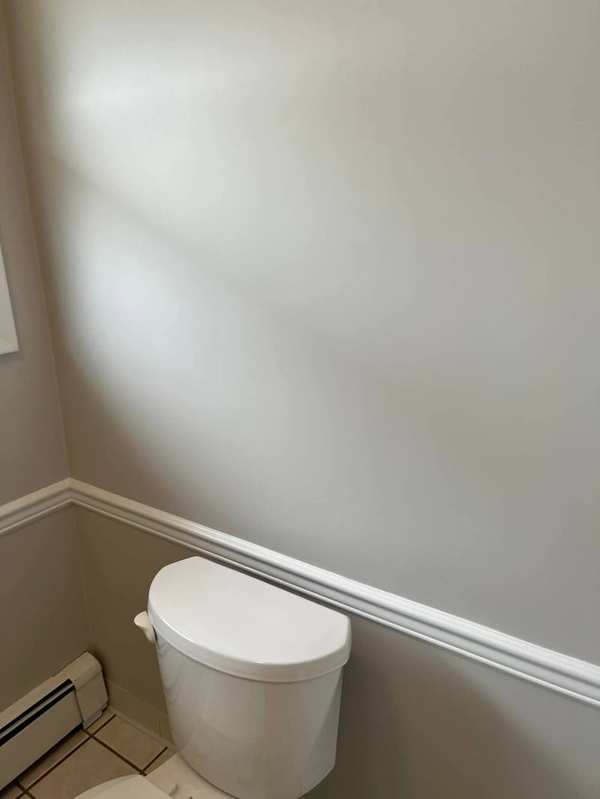
The Best Paint to Use in Your Bathroom
Published June 2025 - Joseph Assise III Painting & Wallpapering, Easton PA
Bathrooms are the hardest environment in the house for paint. Hot showers create steam that condenses on walls and ceilings. Surfaces go from dry to wet to dry repeatedly. Poor ventilation lets humidity sit against the paint film for extended periods. And mold spores are always present - they are waiting for the right conditions to colonize.
Using a standard interior paint in a bathroom is not a disaster, but it is a shortcut you will pay for within a few years - flaking near the shower, mold spots appearing near the ceiling, and a paint film that starts to look chalky and worn long before its time.
Here is what actually works in bathrooms, based on years of bathroom painting across the Lehigh Valley.
The Moisture Challenge in Bathrooms
Bathroom walls and ceilings face something unique: repeated cycling between high-humidity steam events and normal dry conditions. This cycling stresses the paint film. Water vapor that penetrates into the wall substrate has to get back out, and if the paint film is too vapor-impermeable, moisture builds up behind it and causes blistering and peeling from the inside out.
The ceiling directly above the shower takes the most punishment. This is where cheap paint fails first - it turns chalky, gets mold spots, and starts flaking. The wall around the shower head and the top 18 inches of the shower surround wall run a close second.
What Mold-Resistant Paints Actually Do
Mold-resistant bathroom paints contain antimicrobial additives - most commonly zinc oxide compounds and various biocides - that inhibit the growth of mold and mildew on the paint surface. They do not prevent moisture from existing; they make the paint film itself a hostile environment for mold spores that land on it.
It is important to understand what these paints cannot do: they cannot stop mold growing behind the wall in wet drywall, behind tile, or in areas with active water infiltration. If your bathroom has a moisture problem, painting over it with a mold-resistant paint is not a solution. It is a delay.
But for typical bathroom condensation and humidity, mold-resistant bathroom paints genuinely extend the life of the finish and reduce the surface mold that forms on ceilings and upper walls in all but the best-ventilated bathrooms.
Sheen Level Matters in Bathrooms
This is one of the most practical decisions in bathroom painting, and it is often chosen wrong - see our full paint sheen guide for the complete breakdown:
- Flat / matte: Do not use this in bathrooms. Flat paints are porous by design - that is how they hide surface imperfections. In a bathroom, that porosity traps moisture and makes mold more likely, not less. Flat bathroom paint is also nearly impossible to wipe down without damaging the finish.
- Eggshell: Acceptable in a half-bath or powder room with good ventilation and no shower. Not the best choice for full bathrooms with showers or tubs.
- Satin: The sweet spot for most bathroom walls. Satin provides enough sheen to be moisture-resistant and wipeable while still looking good and not being overly reflective. Hides minor surface imperfections better than semi-gloss. This is the most common recommendation for bathroom walls.
- Semi-gloss: The best choice for bathroom ceilings (especially above showers), trim, and door and window casings. High moisture resistance, easy to wipe down. Some people use semi-gloss on walls and love the clean, bright look - it does show surface imperfections more, but in a bathroom that is typically less of an issue.
Top Bathroom Paint Picks
Benjamin Moore Aura Bath and Spa
The benchmark bathroom paint in the industry. Formulated specifically for high-humidity environments. Mildew-resistant. Available in a matte finish that manages moisture better than typical matte paints because of its proprietary binder system. Exceptional color retention and washability. Pricier than most, but the durability per dollar is excellent in a bathroom context.
Sherwin-Williams Emerald Interior
Not bathroom-specific, but the Emerald line's high-density formula performs extremely well in humid rooms. Mold and mildew resistant. Available in satin, which is ideal for bathroom walls. Pairs well with Emerald semi-gloss for trim and ceiling. A complete solution from one product line.
Benjamin Moore Regal Select Bath and Spa
A step down from Aura in price but still a purpose-formulated bathroom product. Good mildew resistance, easy application, and available in the full Benjamin Moore color palette. A solid choice for those who want quality without the Aura price point.
Sherwin-Williams Duration Home
Duration Home is particularly durable in high-traffic, high-use rooms including bathrooms. The scrub resistance is exceptional. Good mildew resistance. Available in satin. Used by many professional painters who need reliable results in bathrooms and kitchens.
Ventilation Importance - Paint Cannot Do Everything
No paint, regardless of price or formulation, will protect a bathroom that has serious ventilation problems. If the exhaust fan does not work, or does not vent to the exterior (some older homes have fans that vent into the attic - a code violation that causes real moisture damage), moisture will continue to build up and no paint film will hold indefinitely.
Before painting a bathroom with a chronic mold or peeling problem, fix the ventilation. Run the fan during showers and for 20 minutes after. If the fan is inadequate, replacing it is one of the highest-value home improvements you can make relative to cost. A quality bathroom exhaust fan can be installed for $150 to $300 including the unit - far less than the painting work it protects.
Grout and Tile Painting - Is It Worth It?
You can paint grout and tile, but manage your expectations carefully. Painted tile in a wet area - the shower surround, tub deck, or floor - will not last. The constant wetting and drying, scrubbing, and thermal expansion cycles defeat even dedicated tile paint within a year or two in a wet zone. Painting tiles in a dry zone (the wall above the vanity, the backsplash area that rarely gets directly wet) can extend cosmetically for several years if properly prepped and sealed.
For grout, specialized grout paint or grout colorant is a better option than trying to brush wall paint into grout lines. It is still not a permanent solution, but it looks far better than trying to drag a brush across a rough grout surface.
If the tile is truly in bad shape cosmetically, replacing it is the better long-term investment over painting it in a wet zone.
Cabinet Paint for Bathroom Vanities
Bathroom vanity cabinets are painted with cabinet-specific formulations rather than wall paint. The most durable options are water-based alkyd paints - products like Benjamin Moore Advance or Sherwin-Williams Emerald Urethane Trim Enamel. These create a hard, furniture-quality finish that resists moisture, fingerprints, and cleaning chemicals better than standard latex wall paint. They level beautifully without brush marks and cure to a semi-gloss or satin sheen depending on the product chosen.
Apply in thin coats and allow full cure time before heavy use. Rushing this is the main reason vanity paint chips early.
Frequently Asked Questions
Can I use regular interior paint in a bathroom?
You can, but it will not last as long as a bathroom-specific formulation. Regular interior paint in a bathroom - particularly above showers and on ceilings - will typically show mold growth, chalk, or peeling within 2 to 3 years in a well-used bathroom. Bathroom paint costs only slightly more and lasts significantly longer. The difference in a small space is maybe one extra quart of paint cost.
What is the best paint for a bathroom ceiling?
For bathroom ceilings, semi-gloss or a quality satin with mold resistance is the best choice. Semi-gloss is ideal because moisture beads on it rather than absorbing. Use a mold-resistant product. Benjamin Moore Waterborne Ceiling Paint is also an option for ceilings specifically, though many painters use the same satin or semi-gloss they use on walls for consistency.
How do I deal with existing mold on bathroom walls before painting?
Active mold must be killed before painting. Use a diluted bleach solution (1 part bleach to 3 parts water) on the affected areas. Apply, let it sit for 10 to 15 minutes, scrub gently, and rinse. Let the surface dry completely - at least 24 hours. Then prime with a mold-resistant primer before applying topcoat. If the mold is deep in the drywall (the paper is soft or damaged), that section of drywall needs to be cut out and replaced. Paint will not fix structural mold damage.
How long does bathroom paint last?
In a well-ventilated bathroom with a quality mold-resistant paint like Benjamin Moore Aura Bath and Spa, you can expect 5 to 7 years before the finish noticeably degrades. In a poorly ventilated bathroom with a standard interior paint, 2 to 3 years is more realistic. Cleaning the walls periodically with a mild cleaner (not bleach on painted surfaces) also extends the life of the finish.
Should I paint the bathroom ceiling the same color as the walls?
In bathrooms, painting the ceiling white or near-white while using a color on the walls is traditional and practical - it keeps the ceiling reflective and helps the space feel larger. Matching walls and ceiling in the same color works well in larger bathrooms or when creating a bold design statement. If you match, use the same mold-resistant product on both surfaces.