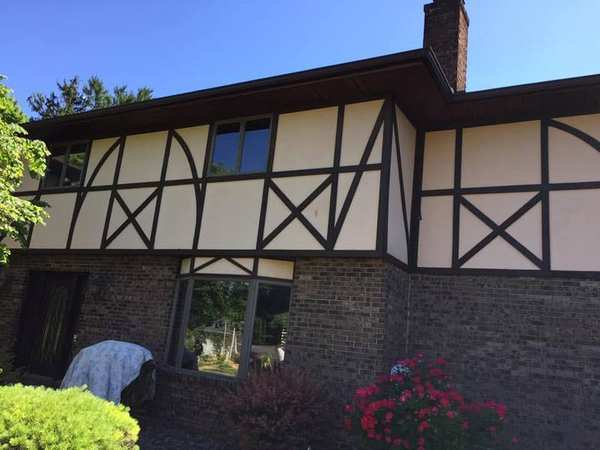
How Much Does It Cost to Paint a Two-Story House Exterior?
Published March 2026 - Joseph Assise III Painting & Wallpapering, Easton PA
One of the most common questions we get from homeowners in the Lehigh Valley is some version of this: "I have a two-story colonial - what is this going to run me?" It is a fair question, and the honest answer is that the number varies quite a bit depending on factors specific to your home. But there is a realistic range, and understanding what pushes prices up or down will help you evaluate any estimate you receive.
After painting two-story homes across Easton, Palmer, Bethlehem, and surrounding areas for over a decade, here is what we see on real projects from start to finish.
Typical Price Range for a Two-Story Exterior
For a standard two-story home in the Easton and Lehigh Valley area, you can expect exterior painting to fall somewhere between $4,500 and $9,500 for a complete job - meaning prep, prime where needed, two finish coats on all siding, and trim work included. The wide range reflects the real differences in home size, siding condition, and the level of prep required.
Here is a rough breakdown by home size and condition:
- 1,500 to 2,000 sq ft living area (typical colonial or cape): $4,500 to $6,500
- 2,000 to 2,800 sq ft (larger colonial or center-hall layout): $6,000 to $8,500
- 2,800+ sq ft or homes with complex architecture: $8,000 to $12,000+
- Homes with significant peeling or repairs needed: Add $500 to $2,000 depending on scope
These are real-world numbers, not estimates from a national pricing database. Regional labor costs, paint quality, and local contractor overhead all factor into what you see in the Lehigh Valley market specifically.
What Drives the Cost Up on a Two-Story
The second story is the biggest cost driver compared to a single-story home. Working at height requires more setup time, extension ladders or scaffolding, and slower production. A two-story home with the same square footage of siding as a ranch will almost always cost more because of the equipment and time involved in safely reaching and painting the upper section.
Other factors that add cost:
- Extensive peeling or chalking paint. Old paint that is lifting off the siding has to be removed before anything new goes on. Scraping and hand-sanding large areas is labor-intensive. Power washing alone will not solve it.
- Wood rot or damaged siding. If boards are soft, they need to be replaced before painting. We can handle minor repairs, but significant rot repair adds both material and labor costs.
- Multiple colors or color changes. A home going from a single beige body color to a scheme with three or four colors takes more time to cut in and mask. Color changes from dark to light also often require additional primer coats.
- A lot of trim and detail work. Homes with many windows, shutters, decorative trim, columns, or detailed millwork take considerably longer to paint properly than a home with clean, minimal lines.
- Brick or masonry mixed with siding. If your home has a brick base or masonry sections that need to be painted or treated separately, that adds complexity and cost.
- Difficult site access. If landscaping, decks, or grade changes make it hard to position ladders or equipment, setup time increases.
What Is Typically Included in an Exterior Painting Quote
A professional exterior painting quote should spell out exactly what is covered. When you compare quotes from multiple contractors, make sure you are comparing the same scope. Here is what a complete job typically includes:
- Power washing all siding and surfaces before painting
- Hand scraping and sanding areas of peeling paint
- Caulking gaps around windows, doors, trim joints, and penetrations
- Spot priming bare wood, repairs, and bleed-through areas
- Two finish coats on all siding
- Full trim painting including fascia, soffits, window trim, and door trim
- Cleanup and drop cloth protection for landscaping and hardscape
A quote that seems significantly cheaper than others is almost always leaving something out - usually prep work or a second coat. Ask specifically what is included before you sign anything.
Paint Quality and Its Impact on Price
The paint itself is a real cost variable. There is a meaningful difference between a builder-grade paint and a premium exterior coating like Sherwin-Williams Duration, Benjamin Moore Aura Exterior, or PPG Timeless. Premium paints cost $60 to $90 or more per gallon, compared to $35 to $50 for mid-grade. On a two-story house, the paint alone might account for $800 to $1,600 of the total cost depending on the product and how many gallons are needed.
The trade-off is longevity. A budget exterior paint on a two-story home in a region with hot summers, cold winters, and freeze-thaw cycles like the Lehigh Valley may look weathered within 5 to 7 years. A quality exterior paint applied correctly can hold up 10 to 15 years with minimal touch-up. The extra cost upfront often pays for itself by extending the repaint cycle.
DIY vs Hiring a Professional on a Two-Story
Painting a single-story home yourself is a manageable weekend project for a capable homeowner. A two-story is a different situation. Working safely at the height required to reach second-story gables and peaks requires proper extension ladders, standoffs, and knowledge of how to position equipment on uneven or landscaped ground. Fall injuries from ladders are among the most common home improvement accidents. It is not a risk worth taking to save money on labor.
Beyond safety, two-story exteriors are where the cost of a poor paint job becomes the most visible and expensive to fix. Streaks, missed areas, and insufficient prep that leads to early peeling are all much harder to address once a contractor has left and the season has changed.
How to Get an Accurate Estimate
The only way to get a real number for your specific home is an in-person estimate. When we visit a home in Easton, Palmer, or elsewhere in the Lehigh Valley, we walk the entire exterior, assess the siding condition, count linear feet of trim, and factor in any access challenges before we quote. A price given over the phone or based on square footage alone is not an estimate - it is a guess.
Get at least two or three estimates from established local contractors. Ask each one to break out prep, prime, and paint separately so you can see where the differences are. A reputable contractor will not rush through this process.
Frequently Asked Questions
How long does it take to paint a two-story house exterior?
Most two-story homes take 3 to 5 days for a complete exterior paint job when weather cooperates. Larger homes with more prep work or complex trim can run 6 to 8 days. The schedule is also affected by drying time between coats - professional painters will not apply a second coat until the first is fully cured, which takes 4 to 8 hours depending on temperature and humidity.
How often does a two-story exterior need to be repainted?
In Pennsylvania's climate, a properly painted exterior with quality paint typically lasts 8 to 12 years before needing a full repaint. Signs it is time include visible fading, chalking (a chalky powder on the surface), peeling at edges or joints, or cracking caulk around windows and trim. Catching it before widespread peeling saves significantly on prep costs the next time around.
Does the color I choose affect the price?
The color itself does not change the price, but a color change - especially from a dark color to a light one - usually requires an extra primer coat or an additional finish coat to achieve full coverage. Going from charcoal gray siding to a cream white, for example, may add one coat and a noticeable amount to the total cost. Your contractor should flag this during the estimate if it applies to your project.
Should I paint the soffits and fascia too when doing the whole exterior?
Yes, and most professional quotes include this automatically. Soffits and fascia are some of the highest-visibility areas on a two-story home and they take a beating from weather. Painting them while the crew is already set up at height costs very little in incremental labor and keeps the whole exterior looking consistent. Doing them separately as a follow-up project later costs more per square foot because of the setup time involved.
What time of year is best to paint a two-story exterior in Pennsylvania?
Late spring through early fall - roughly May through October - is the ideal window for exterior painting in the Lehigh Valley. Paint needs temperatures above 50 degrees Fahrenheit to apply and cure properly, and ideally below 90 degrees to avoid flash drying. Late summer and early fall are often ideal because humidity is lower than spring. Avoid scheduling exterior work in the weeks before freezing temperatures are expected to return.