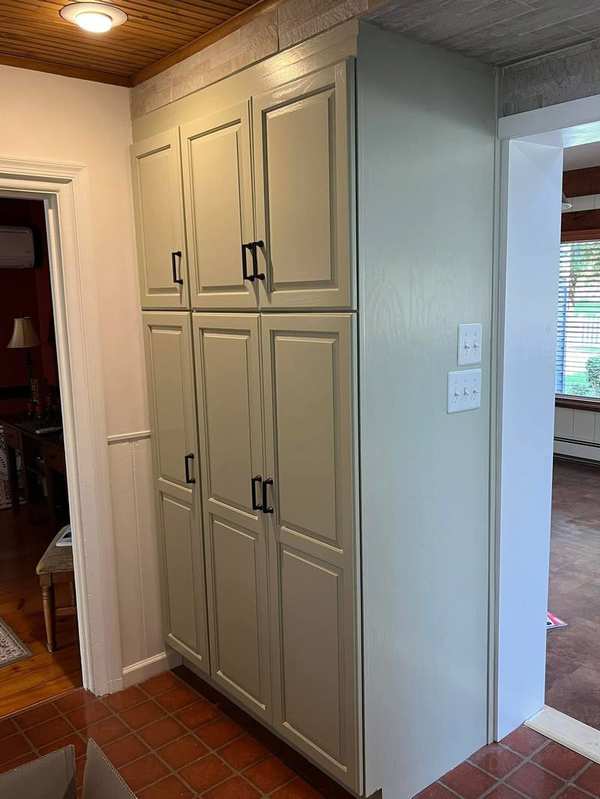
How to Paint Trim, Baseboards, and Doors Like a Pro
Published July 2025 - Joseph Assise III Painting & Wallpapering, Easton PA
If you have ever watched someone paint trim and then tried to do it yourself, you know the gap between watching and doing is significant. Trim painting is more demanding than wall painting. The lines are precise, the surfaces are small, and every drip, brush mark, or uneven edge is visible in a way that wall paint mistakes often are not.
But trim done right transforms a room. Clean white baseboards, freshly painted door casings, and a crisp door finish are what make a paint job look finished and professional rather than just adequate.
Here is what actually goes into doing it right.
Why Trim Painting Is Harder Than Walls
Walls are forgiving surfaces. You roll on paint, keep a wet edge, and the large surface area hides minor inconsistencies. Trim is unforgiving in every direction:
- It is narrow, so drips roll to the floor or onto the wall quickly.
- Every brush stroke is visible in raking light from windows and lamps.
- The intersection of trim with wall or floor must be clean - a wavy line at the baseboard is the first thing people notice in a room.
- Trim typically gets a higher-sheen paint, which amplifies surface imperfections.
- Existing trim often has build-up from previous paint layers - ridges, drips, and brush marks baked in from past jobs that show through unless sanded out first.
The prep on trim is as important as the painting. You cannot brush over old drips and expect them to disappear.
Best Paint for Trim
Trim paint is a different category from wall paint. The finish needs to be harder, more washable, and more durable because trim gets bumped, scuffed, and cleaned far more frequently than walls.
- Benjamin Moore Advance: A water-based alkyd that levels exceptionally well (minimal brush marks), cures to a hard finish, and is available in semi-gloss and satin. The industry favorite for trim among professional painters. Slow dry time is the only downside - plan on 16 to 24 hours before recoating.
- Sherwin-Williams Emerald Urethane Trim Enamel: A urethane-modified water-based formula with excellent hardness and a beautiful self-leveling finish. Fast dry time (recoatable in 4 hours). Very scrubbable. Comparable quality to Advance.
- Benjamin Moore Regal Select Semi-Gloss: A reliable step down from Advance. Easier to apply for less experienced painters because it has less self-leveling and more open time. Good durability. Works well for baseboards and door casings.
Avoid using standard wall latex for trim. It does not cure as hard, will not be as scrubbable, and tends to remain tacky at contact points - like door hinges and where a door contacts a frame - long after it "dries."
Oil vs Water-Based Paint for Trim
Traditional alkyd (oil-based) paints have long been the standard for trim because of their exceptional hardness and self-leveling. Oil levels to a nearly flawless finish because of its long open (wet) time. The downsides are the VOCs, the cleanup (mineral spirits), the yellowing over time (especially in low-light areas), and the 24-hour dry time.
Today, water-based alkyds like Benjamin Moore Advance have largely closed the quality gap. They have the self-leveling of oil, cure to comparable hardness, clean up with water, and do not yellow. For most Lehigh Valley homes, water-based alkyd is the right choice for trim - better performance without the downsides of oil.
The one exception: if the existing trim is already painted with oil and you are recoating in the same color or a very similar one, using oil again is perfectly reasonable. The issue arises when you apply water-based latex directly over old glossy oil trim - adhesion can be poor unless you scuff-sand and use a bonding primer first.
Cutting In Cleanly Without Tape
Professional painters cut in trim lines freehand, without tape, because tape has its own limitations - it can allow bleed-through on textured walls, it leaves a hard edge on certain sheens, and applying and removing it takes considerable time on long runs of baseboard.
The freehand technique requires a good quality angled sash brush (1.5-inch to 2-inch for most trim) and consistent hand pressure. Load the brush lightly and use the tip to pull a clean line. Rest your hand against the wall lightly to stabilize your motion. Move the brush in a long, consistent stroke rather than short dabs. It takes practice but is faster and often cleaner than tape on smooth walls.
For rough, textured, or irregular wall surfaces, tape is often the right call. Press it firmly along the edge with a putty knife to seal the edge and prevent bleed-through. Remove the tape while the paint is still slightly wet - removing tape from fully dried paint can lift the paint film.
Painter's Tape - When to Use It and When to Skip It
- Use tape when: painting walls right up to trim that is already finished, the wall surface is textured, you are a less experienced painter, or the color contrast between trim and wall is very high (like white trim on a dark wall).
- Skip tape when: painting the trim first and allowing it to dry before painting adjacent wall color (the standard professional sequence), the wall and trim are similar colors, or you have the freehand skill to pull clean lines consistently.
Door Painting Order - Do Not Get This Wrong
Painting a door in the wrong sequence causes visible lap marks and wet-edge problems. The correct sequence for a flat or panel door:
- Remove the door hardware or mask it carefully with tape. Remove or mask hinges.
- Sand the door lightly with 220-grit to degloss and smooth old brush marks. Wipe down with a tack cloth.
- Panel doors: Paint the molded recesses and panel faces first (use a small brush to get into corners), then the horizontal rails (the horizontal pieces), then the vertical stiles (the outer vertical pieces), then the edges.
- Flat slab doors: Start at the top and work down in vertical passes, maintaining a wet edge. Do not stop in the middle of a pass.
- Paint the door edges last - the latch edge, the hinge edge (if painting over hinges), and the top and bottom edges. Match the interior or exterior color to whichever environment that edge faces.
- Let the first coat dry fully (follow the product's recoat time), then apply the second coat in the same sequence.
Painting Hinges and Hardware
Remove hardware when possible. Painting over hinges and door knobs looks amateur and creates adhesion problems where paint is thin and gets contact friction. A screwdriver and 5 minutes removes most standard interior door hardware. If hinges cannot be removed, mask them precisely with tape or use a small brush to cut around them carefully.
If you want to change the finish of existing brass or brushed nickel hardware, spray painting is more effective than brush painting. But physically removing and replacing hardware is always a better result than painting over it.
Common Trim Painting Mistakes
- Not sanding old trim first. Old drips, brush ridges, and accumulated paint layers create texture that shows through new paint. Light sanding with 150-grit and a wipe-down before you start produces a much cleaner result.
- Using too much paint on the brush. Overloaded brushes drip and leave heavy brush marks. Dip, tap off the excess, and apply in controlled strokes.
- Cutting in against wet wall paint. Paint the trim first and let it dry completely before painting adjacent wall color. Trying to cut in against wet paint results in drags and blends that are very difficult to fix.
- Using a cheap brush. A $4 foam brush or a bargain bristle brush drags and leaves texture in trim paint. For Advance or Emerald Urethane, use a quality nylon-polyester brush rated for water-based paints.
- Not painting the back edges of doors. The top and bottom edges of interior doors need paint too, or they absorb humidity unevenly and can warp or swell at those edges over time.
Frequently Asked Questions
Should I paint walls or trim first?
Paint trim first. Apply trim color, let it dry fully, then paint walls up to the dried trim. This is the professional sequence because it is far easier to cut wall paint against dry, cured trim than to cut trim paint against finished walls. You can use a roller to apply wall paint and slightly overlap the trim - the dried trim paint holds the line, and any overlap on trim wipes off easily when wet.
Can I use a roller on baseboards?
A small 4-inch foam roller can speed up the face (front surface) of wide baseboards significantly. Roll the face, then cut in the top edge where the baseboard meets the wall with a brush. For narrow baseboards under 3 inches, a brush alone is usually faster. A roller on baseboards requires care to avoid paint transfer to the floor below.
How do I get rid of old brush marks in trim?
Sand them out before painting. Use 120 to 150-grit sandpaper to knock down any raised brush marks or drip ridges. Wipe the dust clean. Then apply a self-leveling trim paint like Benjamin Moore Advance, which will flow out to a smoother finish than the marks you are trying to cover. Without sanding, you are just adding layers on top of the imperfections.
How long before I can close a freshly painted door?
Latex and water-based alkyd paints are dry to the touch in 1 to 2 hours but continue to cure for up to 30 days. Closing a door too soon - within the first 24 to 48 hours - can cause the door to stick to the frame, especially at the latch side where contact pressure is consistent. Leave the door open or propped ajar for at least 24 hours after the final coat. After 48 hours, most standard doors can be closed without sticking.
What is the best way to paint window trim and sills?
Paint window sills with a satin or semi-gloss trim paint. Sills get direct sun exposure and physical contact - a hard, durable finish matters here. Use the same surface preparation approach as baseboards: sand lightly, wipe clean, apply primer if needed, two coats of trim paint. For the stops (the thin pieces the window sash sits against), a small detail brush is necessary to work in close quarters without getting paint on the glass.