Hallway and Staircase Painting in Easton PA -- High-Traffic Spaces That Take a Beating
Hallways and staircases show wear faster than any other surface in the home. The right sheen, proper prep, and professional technique are what separate a repaint that lasts from one that scuffs and marks within months.
Get Your Free Estimate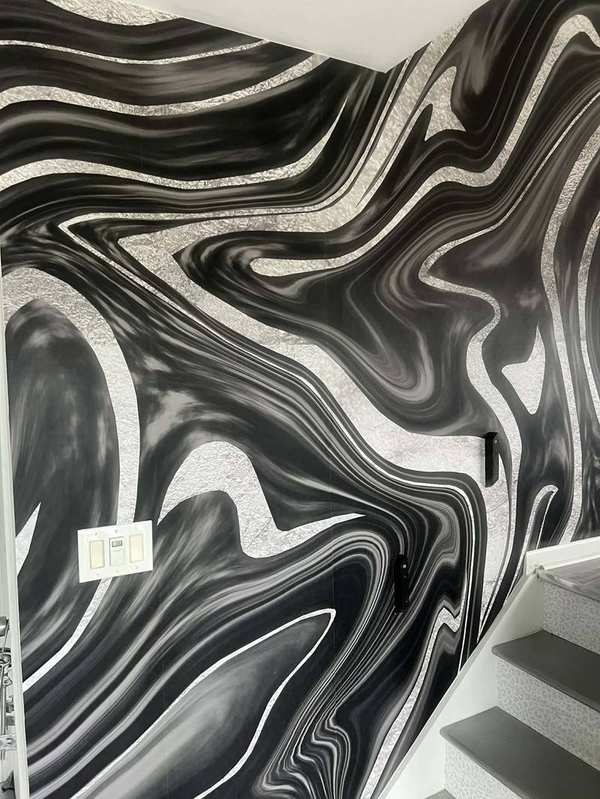
Why Hallways Demand Satin or Semi-Gloss -- And What Happens When You Use the Wrong Finish
Of all the rooms and surfaces in a home, hallway walls take the most abuse per square foot. Every person who passes through a hallway brushes the wall with a shoulder, a bag, a coat. Children run their hands along the wall. Furniture gets moved and bumped. Light switch plates and door frames are touched hundreds of times per week.
Flat or eggshell paint in a hallway will show scuffs and marks within weeks of a fresh paint job. These sheens absorb rather than resist contact, and they cannot be wiped clean without abrading the paint film -- so every cleaning attempt just reveals more of the damage. The right finish for hallways is satin at minimum and semi-gloss in very narrow corridors or areas with the heaviest contact.
Satin finish is where durability and appearance meet. It has enough sheen to be highly washable and scuff-resistant, but not so much gloss that it looks commercial or draws attention to wall imperfections. In a hallway, satin is the professional's standard choice.
Hallway trim, baseboards, and door frames should be in semi-gloss -- these are the highest-contact surfaces in the entire hallway and need the hardest, most washable film possible. Chair rail and wainscoting, if present, also gets semi-gloss for the same reason.
Hallway ceilings are typically painted flat white. Unlike walls, ceilings do not see direct contact, and flat reduces the harshness of overhead light in a corridor.
- Hallway walls -- satin minimum, semi-gloss for very high traffic areas
- Trim, baseboards, door frames -- semi-gloss
- Staircase walls -- satin for durability alongside the stairs
- Stair risers -- semi-gloss for the most durable finish on vertical stair surfaces
- Ceiling -- flat white
Staircase Painting -- Keeping the House Running While We Work
Staircase painting is one of the most logistically demanding interior painting projects precisely because the staircase cannot simply be closed off for two days the way a bedroom can. Families need to move between floors throughout the day. Our approach to staircase projects makes this possible without compromising the paint job.
We work from the top of the staircase down to prevent drips from landing on freshly painted surfaces below. By painting alternating steps and allowing them to dry between coats, we ensure that there is always a passable route between floors during the project. We use fast-drying products on riser and tread surfaces to minimize the window during which steps are inaccessible.
Staircase walls -- the long wall running alongside the stairs up to the upper landing -- are among the most architecturally interesting surfaces in many homes and also among the most difficult to access properly. In two-story foyers and open staircase arrangements, reaching the upper portions of these walls requires scaffolding or specialized extension equipment. We carry the appropriate equipment and know how to use it safely.
Handrails and banisters are a frequent staircase painting request. These surfaces take heavy contact from every person who uses the stairs and need a durable, hard-drying enamel topcoat. Spindles, newel posts, and balusters can be painted to coordinate or contrast with the wall color for a cohesive staircase design.
Color as a Design Element in Hallways and Multi-Floor Homes
Hallways and staircase walls serve a functional role as transitions between rooms and floors, but they can also serve a design role as connective tissue that links the visual identity of the home. A consistent trim color throughout all hallways and staircases -- regardless of what happens in individual rooms -- creates visual coherence and makes a home feel designed rather than decorated one room at a time.
Hallway wall color can also function as wayfinding in multi-floor homes. A slightly different wall tone on each floor -- while maintaining the same trim color throughout -- gives each level a distinct feel without creating visual chaos. This is a subtle but effective design approach that many homeowners overlook.
For narrow, dark hallways, light warm neutrals in satin are the best tool for creating the feeling of space and brightness. For foyers and entry halls that see guests, something more designed and intentional -- a wallpaper treatment, a deeper color, a dramatic trim color -- can make a strong first impression. We discuss these possibilities at the free estimate.
We serve hallways and staircases throughout Easton, Bethlehem, Palmer, and the entire Lehigh Valley. Whether it is a single hallway touch-up or a complete foyer and staircase repaint, we bring the right products, the right equipment, and professional technique to every project. See our interior painting services for the full scope of what we offer.
Hallway and Staircase Painting -- Frequently Asked Questions
What paint sheen is best for a hallway?
Satin or semi-gloss are the right choices for hallways. Flat and eggshell are not durable enough for the highest-traffic surfaces in the home. Hallway walls get shoulder contact, backpack brushes, furniture bumps, and hands constantly. Satin is most commonly used -- it is highly washable and scuff-resistant without looking too shiny. Semi-gloss is appropriate for very narrow hallways that see constant wall contact.
How do you paint a staircase without closing it off?
We use a systematic approach that keeps every other step accessible at all times. By painting alternating steps and allowing them to dry fully before painting the ones in between, we maintain safe foot traffic throughout the project. We use fast-drying products on stair risers and treads to minimize the time between coats, and we communicate clearly with homeowners about which steps are wet at any given time.
Can you paint a two-story foyer?
Yes -- two-story foyers are a specialty project that require scaffolding or high-reach equipment to access the upper walls and ceiling safely. We have the equipment and experience to paint two-story foyer walls, ceilings, and the staircase walls running alongside the staircase up to the second floor. These projects should only be attempted with proper staging and safety equipment.
What color works for a dark narrow hallway?
A warm white, bright off-white, or very light greige with a satin finish reflects the most light and makes a narrow hallway feel as open as possible. Painting the trim and ceiling the same light color as the walls -- rather than contrasting them -- reduces the visual boxing effect and makes the hallway feel less confined. Upgraded lighting further amplifies the effect.
How do you prep a high-traffic hallway for paint?
High-traffic hallways require more prep than almost any other interior room. We clean all wall surfaces with a degreasing cleaner to remove handprint oils and grime that accumulate over years of use. We sand or repair all scuffs, dings, and nail holes -- hallways typically have the most of these of any room in the house. We apply a durable primer before the finish coat to ensure maximum bond and resistance to the traffic the hallway will continue to see.